





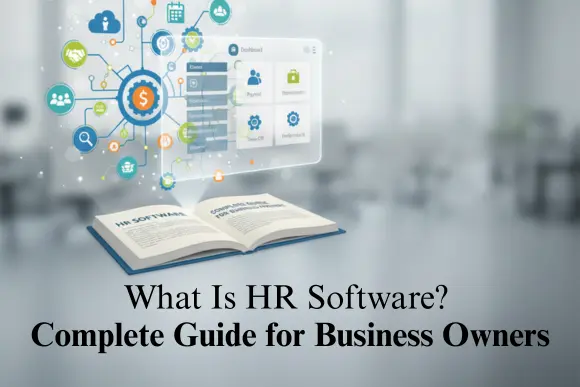
What Is HR Software? Complete Guide for Business Owners
Introduction
Running a business today requires efficient people management. This guide explains what HR Software is, how it works, why you need it, and how to choose the right solution.
HR Software — sometimes called an HRMS or HCM platform — is a digital solution that streamlines and automates human resources functions. Instead of juggling spreadsheets, emails, and paper files, organizations use HR systems to centralize recruitment, onboarding, payroll, attendance tracking, performance management, and more.
Why Does Your Business Need HR Software Today?
HR technology is no longer only for large enterprises. Cloud-based platforms make robust HR features available to small and medium businesses as well. Key benefits include:
Reduces administrative burden
Automation frees HR teams from repetitive manual tasks so they can focus on people and strategy.
Enhances compliance
Modern HR systems include tools to help comply with local labor laws, tax rules, and audit requirements.
Improves employee experience
Self-service portals, transparent workflows, and mobile access make employees happier and more productive.
Faster decision-making
Real-time analytics and dashboards let leaders act on accurate workforce data.
Supports scalability
As your business grows, scalable HR systems expand capabilities without a major overhaul.
Key Functions of HR Software for Modern Businesses
A well-rounded HR platform covers the full employee lifecycle from hire to retire. Common modules include:
✅ Recruitment & Applicant Tracking
Automate job postings, track applicants, run assessments, and schedule interviews to reduce time-to-hire.
✅ Digital Onboarding
Paperless onboarding with automated paperwork, welcome messages, and initial training workflows.
✅ Attendance & Leave Management
Centralized clock-in/out, leave requests, overtime tracking, and shift scheduling.
✅ Payroll & Compensation
Automated salary calculations, statutory deductions, reimbursements, and bank transfers.
✅ Employee Database Management
Secure, searchable employee records including contracts, certifications, and personal data.
✅ Performance Management
Goal-setting, regular reviews, appraisals, and feedback cycles to align employees with business objectives.
✅ Learning & Development
Host training modules, track certifications, and plan employee upskilling initiatives.
✅ Employee Self-Service
Allow employees to view payslips, request leave, update details, and check benefits without HR intervention.
✅ Analytics & Reporting
Dashboards and reports that reveal trends like attrition risk, hiring velocity, and workforce costs.
How HR Software Transforms HR for Business Owners
Transformation goes beyond saving time — it enables growth and strategic HR. Benefits include:
- Boosts productivity: Automation reduces manual work and repetitive processes.
- Strengthens decision-making: Data-driven insights help prioritize initiatives.
- Enhanced transparency & accountability: Defined workflows reduce confusion.
- Stronger data security: Encrypted storage and access controls protect sensitive data.
- Improves employer brand: A modern HR experience attracts top talent.
Who Can Benefit from HR Software?
Organizations across industries can benefit — startups, SMEs, tech firms, healthcare, hospitality, manufacturing, retail, and professional services. If your headcount is growing or you want to reduce HR overhead, HR software delivers value.
Common HR Challenges Solved by HR Software
| Traditional HR Issues | How HR Software Helps |
|---|---|
| Manual payroll errors | Automated calculations and statutory updates |
| Missing employee documentation | Centralized and searchable records |
| Slow hiring process | Faster screening and automated interview scheduling |
| Confusing leave policies | Clear rules and real-time balance tracking |
| Poor performance tracking | Continuous feedback and measurable goals |
| High attrition | Improved engagement and recognition programs |
Cloud-Based vs On-Premise HR Software: Which Is Better?
Choosing deployment affects cost, access, and maintenance. A quick comparison:
| Feature | Cloud-Based HR Software | On-Premise HR Software |
|---|---|---|
| Setup Time | Fast, often within days | Longer installation process |
| Cost | Subscription-based, lower upfront cost | High initial investment |
| Maintenance | Provider-managed | Requires internal IT |
| Access | Remote access from anywhere | Usually limited to internal networks |
| Updates | Automatic updates included | Paid or manual updates |
For most growing businesses, cloud-based HR platforms offer the best balance of cost, scalability, and convenience.
Important Features to Look for When Choosing HR Software
When evaluating solutions, confirm the platform includes:
- Intuitive user interface and mobile compatibility
- Role-based access controls and secure data storage
- Local legal compliance and payroll localization
- Integrations with payroll providers, time-clocks, and productivity tools
- Customization options for workflows and reports
- Reliable customer support and regular upgrades
How HR Software Improves Employee Engagement
Employees expect transparent, fast, and mobile-enabled HR services. HR systems help by offering:
- Mobile access to payslips, leave requests, and policies
- Instant communication and feedback tools
- Recognition and rewards modules
- Personalized learning and development plans
- Clear goal tracking and fair review processes
HR Software and Data Security: A Crucial Priority
HR systems contain sensitive personal and financial data. Look for features such as:
- Multi-factor authentication and role-based permissions
- End-to-end encryption at rest and in transit
- Audit logs and regular security assessments
- Automated backups and disaster recovery
- Compliance with GDPR and applicable local laws
HR Software Trends Shaping the Future of Work
HR technology is evolving quickly. Major trends include:
Artificial Intelligence in HR
AI helps in candidate matching, workforce analytics, and analyzing employee sentiment to predict attrition risks.
Mobile-First HR Experiences
Employees expect to manage HR tasks from their phones — from leave requests to learning modules.
Self-Service Automation
Self-service reduces HR touchpoints and speeds up routine processes.
Data-Driven Workforce Planning
HR leaders use analytics to forecast hiring needs, skill gaps, and budget impacts.
Hybrid Work Support
Tools now support distributed teams with virtual onboarding, remote attendance tracking, and collaboration features.
How to Successfully Implement HR Software in Your Organization
A successful rollout depends on clear planning and stakeholder engagement. Follow these steps:
- Identify your primary HR challenges and goals.
- Choose a scalable, customizable platform that fits your growth plan.
- Involve HR, finance, and operations stakeholders early.
- Provide thorough training and documentation for employees.
- Integrate with existing systems (payroll, time-clocks, ERP).
- Monitor adoption and iterate on workflows.
Partnering with an experienced implementation team reduces risk and speeds up adoption.
What Is the ROI of HR Software?
Business owners commonly ask whether HR software pays for itself. Key ROI areas include:
- Fewer payroll errors and financial leakage
- Faster hiring and reduced vacancy time
- Lower recruitment costs through better retention
- Reduced compliance penalties
- Higher HR productivity allowing focus on strategic activities
Many organizations observe measurable ROI within 3–12 months depending on business size and usage.
Ready to Transform the Way Your HR Works?
If you’re ready to move from paper and spreadsheets to an efficient, scalable HR platform, start by evaluating your core needs and shortlisting platforms that match them. To explore solutions and get expert help, visit our contact page:
Or click the button below to get in touch:
Final Thoughts
Investing in HR automation is an investment in your people and processes. The right HR software reduces errors, speeds up processes, and improves engagement — helping your business stay competitive and grow. If you struggle with payroll, onboarding, attendance, or performance management, a modern HR platform will simplify operations and deliver measurable value.