






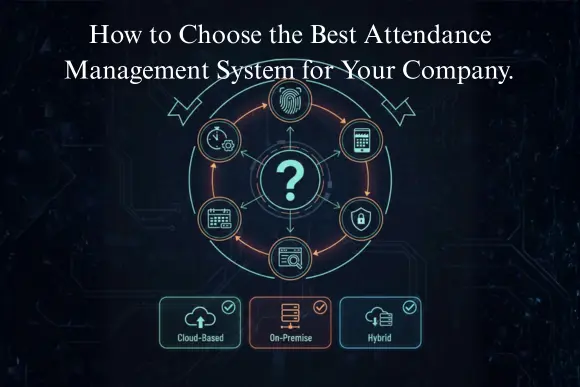
How to Choose the Best Attendance Management System for Your Company
Introduction
Managing employee attendance effectively is one of the core responsibilities of any organization, regardless of size or industry. From ensuring accurate payroll and improving staff accountability to streamlining workforce management and eliminating manual errors, a modern Attendance Management System plays a vital role in business operations.
But with so many solutions available today, how do you choose the Best Attendance Management System for your organization? What features truly matter? How can you ensure the system aligns with your business goals, workforce structure, and compliance requirements?
In this detailed and practical guide, we will break down all the essential factors that you need to consider making the right decision. Whether you are upgrading from a manual method or replacing outdated software, this blog will help you navigate the process with clarity and confidence.
Why an Effective Attendance Management System Matters
1. Ensures Accuracy and Eliminates Manual Errors
Manual attendance tracking—whether done on spreadsheets, registers, or simple punch cards—is prone to errors, manipulation, and inefficiencies. An automated system eliminates discrepancies by recording real-time, tamper-proof attendance data.
2. Saves Time and Reduces Administrative Workload
HR teams spend countless hours reconciling attendance, leaves, and shift details manually. A modern solution automates these tasks, saving significant time and allowing HR to focus on meaningful human-centric work instead of repetitive tasks.
3. Supports Compliance and Legal Requirements
Businesses must adhere to labor regulations, overtime rules, audit trails, and proper documentation. A robust Attendance Management System ensures transparent recordkeeping for smooth compliance.
4. Improves Employee Accountability and Transparency
Transparent tracking encourages employees to follow workplace policies and builds trust in the organization. It also establishes clear communication around attendance expectations.
5. Enables Better Workforce Planning
Accurate attendance data helps managers identify trends, approve leaves efficiently, plan shifts, and maintain optimal staffing levels.
Key Features to Look for in the Best Attendance Management System
1. Cloud-Based Access and Real-Time Data
A modern attendance system must be cloud-based, ensuring remote access, greater visibility, and faster synchronization across multiple devices and locations.
2. Multiple Check-In Methods
The Best Attendance Management System should support biometric scanning, mobile check-ins, RFID cards, QR codes, and web-based login options to suit diverse workforce needs.
3. Seamless Leave and Shift Management Integration
Your system must integrate leave management, shift scheduling, overtime tracking, and real-time synchronization for consistent and accurate records.
4. Employee Self-Service Portal
A self-service portal allows employees to view attendance logs, submit leave requests, check approvals, download reports, and access shift schedules.
5. AI-Enabled Insights and Automation
AI capabilities help detect patterns, reduce fraud, automate alerts, and support data-driven decisions for workforce optimization.
6. Mobile Attendance with GPS and Geofencing
For remote and field teams, GPS-based attendance, photo verification, and geofencing ensure transparency and prevent location fraud.
7. Integration with Payroll and HR Software
A good system must seamlessly integrate with payroll platforms to automate salary processing, overtime calculations, and deductions.
8. Strong Security and Data Privacy Controls
The system should offer encrypted storage, secure hosting, role-based access, and compliance with data privacy laws.
9. Scalability and Customization
As your business grows, the software should easily accommodate new locations, employees, policies, and custom workflows.
10. Detailed and Customizable Reporting
Reporting features help HR teams analyze trends, export summaries, track absenteeism, and generate audit-ready documentation.
How to Evaluate and Compare Attendance Management Systems
1. Identify Your Business Requirements
Start by listing your workforce size, shift structure, remote employee needs, and required check-in methods. This helps you narrow down the right solution.
2. Check User Interface and Ease of Use
A simple, intuitive interface ensures higher adoption rates among employees and reduces training time for HR teams.
3. Test the Features with Real Scenarios
During demos, verify real-time syncing, mobile app performance, reporting quality, and customization options.
4. Evaluate Customer Support and Training
Reliable customer support, onboarding assistance, and documentation play a crucial role in successful implementation.
5. Analyze Total Cost of Ownership
Consider subscription fees, hardware costs, customization charges, support plans, and maintenance expenses.
Benefits of Choosing the Best Attendance Management System
Choosing the right system ensures accurate payroll, simplified shift planning, improved employee accountability, reduced absenteeism, and long-term operational efficiency. It also helps with compliance, audits, workforce transparency, and performance analytics.
Common Mistakes to Avoid When Selecting an Attendance Solution
- Choosing the cheapest solution over the most suitable one
- Ignoring system compatibility with existing HR or payroll tools
- Overlooking mobile attendance capabilities
- Not prioritizing system security and privacy
- Selecting rigid solutions with limited customization
- Failing to consider future expansion
- Skipping employee feedback during trial runs
Why Modern Companies Prefer Smart and AI-Driven Attendance Solutions
With hybrid work, flexible shifts, and field-based roles increasing, companies now require smart, automated systems that support real-time tracking, advanced analytics, process automation, and seamless integrations.
How to Implement the Best Attendance Solution Smoothly
- Define clear attendance policies
- Train HR and managers properly
- Provide simple guidance to employees
- Test the system before full rollout
- Monitor performance during initial stages
- Collect feedback and optimize settings
Looking for the Best Attendance Management System?
If you want a feature-rich, scalable, and AI-powered attendance platform, explore one of the best solutions trusted by modern companies. For more details, visit:
Best Attendance Management System
Conclusion
Choosing the Best Attendance Management System is not just about selecting software—it’s about building accuracy, transparency, and efficiency in workforce management. By understanding features, benefits, integrations, security, and scalability requirements, your company can select the right system confidently.
If you're ready to upgrade your attendance process with automation and intelligence, take the next step today.
Contact here: https://humanec.ai/contact-us